
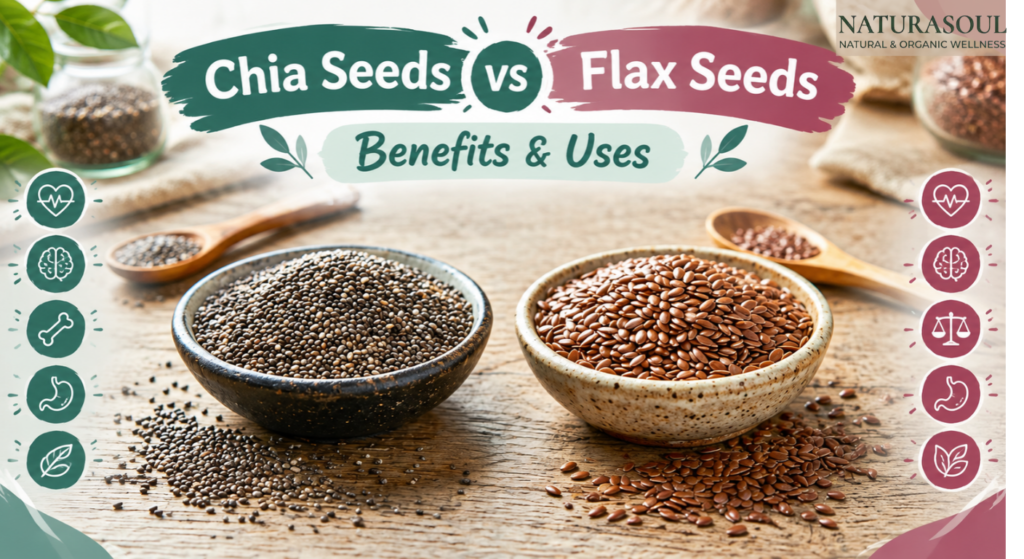
Chia seeds vs flax seeds is one of the most common questions in healthy eating, and for good reason. Both are tiny, affordable seeds packed with fibre, plant protein and omega-3 fats. But they are not the same, and they are used very differently in the kitchen.
At Naturasoul, a trusted online store for seeds, dry fruits and spices in Yamunanagar, we get asked this all the time. This guide explains the differences simply so you can pick the right seed for your routine.
Both chia seeds vs flax seeds (alsi) provide fibre, plant protein and omega-3 (ALA), making them useful additions to your winter diet. Chia seeds are easy to add whole to porridge, warm milk or overnight oats, while ground flax seeds can be mixed into soups, rotis and warm breakfast bowls. During winter, both offer convenient ways to add variety and nutrients to everyday meals. Neither is universally better; choose the one that best fits your food preferences and routine.
Chia Seeds vs Flax Seeds: Nutrition Comparison
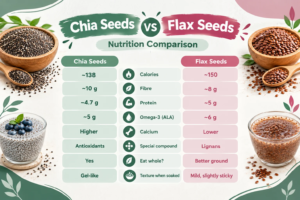
Approximate values per 28 g (1 oz):
| Nutrient | Chia Seeds | Flax Seeds |
|---|---|---|
| Calories | ~138 | ~150 |
| Fibre | ~10 g | ~8 g |
| Protein | ~4.7 g | ~5 g |
| Omega-3 (ALA) | ~5 g | ~6 g |
| Calcium | Higher | Lower |
| Special compound | Antioxidants | Lignans |
| Eat whole? | Yes | Better ground |
| Texture when soaked | Gel-like | Mild, slightly sticky |
Values are approximate and vary by source and brand.
What Are Chia Seeds?
Chia seeds come from the Salvia hispanica plant. They are tiny, mild in taste and absorb many times their weight in water, forming a gel. This makes them filling and ideal for drinks and puddings.
Why people like them
- They need no grinding or cooking.
- They are high in fibre and plant-based omega-3.
- They are a good source of calcium and antioxidants.
- They have a neutral taste and blend into almost anything.
What Are Flax Seeds (Alsi)?
Flax seeds, called alsi in Hindi, come from the flax plant. They have a nutty flavour and have been part of Indian kitchens for generations, especially in winter recipes such as alsi laddoos and roasted seed mixes.
Why people like them
- They are rich in fibre and ALA omega-3.
- They contain lignans, plant compounds studied for their antioxidant activity.
- They are versatile and work in Indian dishes such as laddoos, chutneys, parathas and rotis.
- They are easy on the pocket compared with many other seeds.
Important: whole flax seeds often pass through the body undigested, so dry-roast and grind them, or buy them ground. Explore our Flax Seeds (Alsi).
Key Differences Between Chia seeds vs Flax Seeds
- Preparation: Chia can be eaten whole or soaked. Flax seeds is best ground.
- Taste: Chia is neutral. Flax seeds is nutty.
- Texture: Chia forms a thick gel. Flax seeds adds a light, slightly sticky texture.
- Shelf life: Chia stays fresh longer. Ground flax goes rancid faster.
- Culinary use: Chia suits drinks, puddings and overnight oats. Flax suits Indian cooking and baking.
- Plant compounds: Chia is known for antioxidants and calcium. Flax seeds is known for lignans.
Which Should You Choose?
- Choose chia seeds if you want quick, no-prep meals, such as chia pudding, smoothies or lemon water.
- Choose flax seeds if you cook Indian food at home and enjoy recipes like alsi laddoo, chutney or seed-mix rotis.
- Choose both if you want variety. Many people use 1 teaspoon of each in smoothies, oats or curd.
How to Eat Chia seeds vs Flax Seeds (alsi)
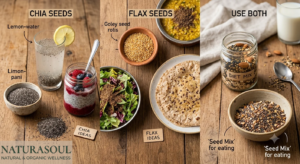
Chia seed ideas
- Soak 1 tablespoon in a glass of water or nimbu pani for 10 to 15 minutes.
- Make overnight chia pudding with milk or plant milk and fruit.
- Stir into oats, curd or smoothies.
Flax seed ideas
- Dry-roast, cool and grind, then sprinkle over salads, dal, curd or sabzi.
- Mix ground flax seeds into roti or paratha dough.
- Make alsi laddoo or alsi chutney, which suit the cooler months.
Use both
- Add a little of each to our Diet Mix or your own seed mix for a daily healthy snack.
How Much Should You Eat Per Day?
Most people use about 1 to 2 tablespoons a day. Start with 1 teaspoon and increase slowly. Seeds are high in fibre, and adding a lot too fast can cause bloating, so drink enough water throughout the day.
Who Should Be Careful?
Check with your doctor first if you are pregnant, take blood thinners or diabetes medication, have a digestive condition or have a known seed allergy. This article is general information and not medical advice.
How to Store Seeds
- Use airtight containers away from heat, light and moisture.
- Keep whole seeds in a cool, dry place.
- Grind flax in small batches and refrigerate it, because ground flax spoils faster.
- If seeds smell bitter or stale, don’t use them.
Where to Buy Chia and Flax Seeds in Yamunanagar
Naturasoul, based in Yamunanagar, Haryana, offers freshly packed, natural seeds and superfoods delivered to your doorstep.
Buy Chia Seeds | Buy Flax Seeds (Alsi) | Shop All Seeds & Superfoods
Also read: Chia Seeds vs Sabja Seeds: What’s the Real Difference? and What Is a Diet Mixture?
Frequently Asked Questions
1. Which is better, chia seeds vs flax seeds?
Neither is better for everyone. Chia seeds is more convenient, and flax is traditional and works well in Indian cooking. Many people eat both.
2. Can I eat chia and flax seeds together?
Yes. About 1 teaspoon of each daily is common for healthy adults.
3. Do I need to soak chia and flax seeds?
Chia is best soaked for 10 to 15 minutes. Flax should be ground, and soaking is optional.
4. Are chia seeds vs flax seeds good for weight loss?
They are high in fibre and help you feel full, which may support a balanced diet, but no seed causes weight loss on its own.
5. Are chia seeds and sabja seeds the same?
No. They look similar when soaked but come from different plants. Read our chia vs sabja guide.
6. Can I eat flax seeds whole?
You can, but your body absorbs far more from ground flax.
7. Do you deliver chia and flax seeds in Yamunanagar and across India?
Yes. Naturasoul is based in Yamunanagar, Haryana, and delivers to your doorstep. Check the checkout page for delivery availability in your area.

Best Dry Fruits to Eat in Winter | Benefits & Daily Quantity Guide
The best dry fruits for winter are almonds (badam), cashews (kaju), pistachios, raisins, dried Fruits snakcs. A common daily serving
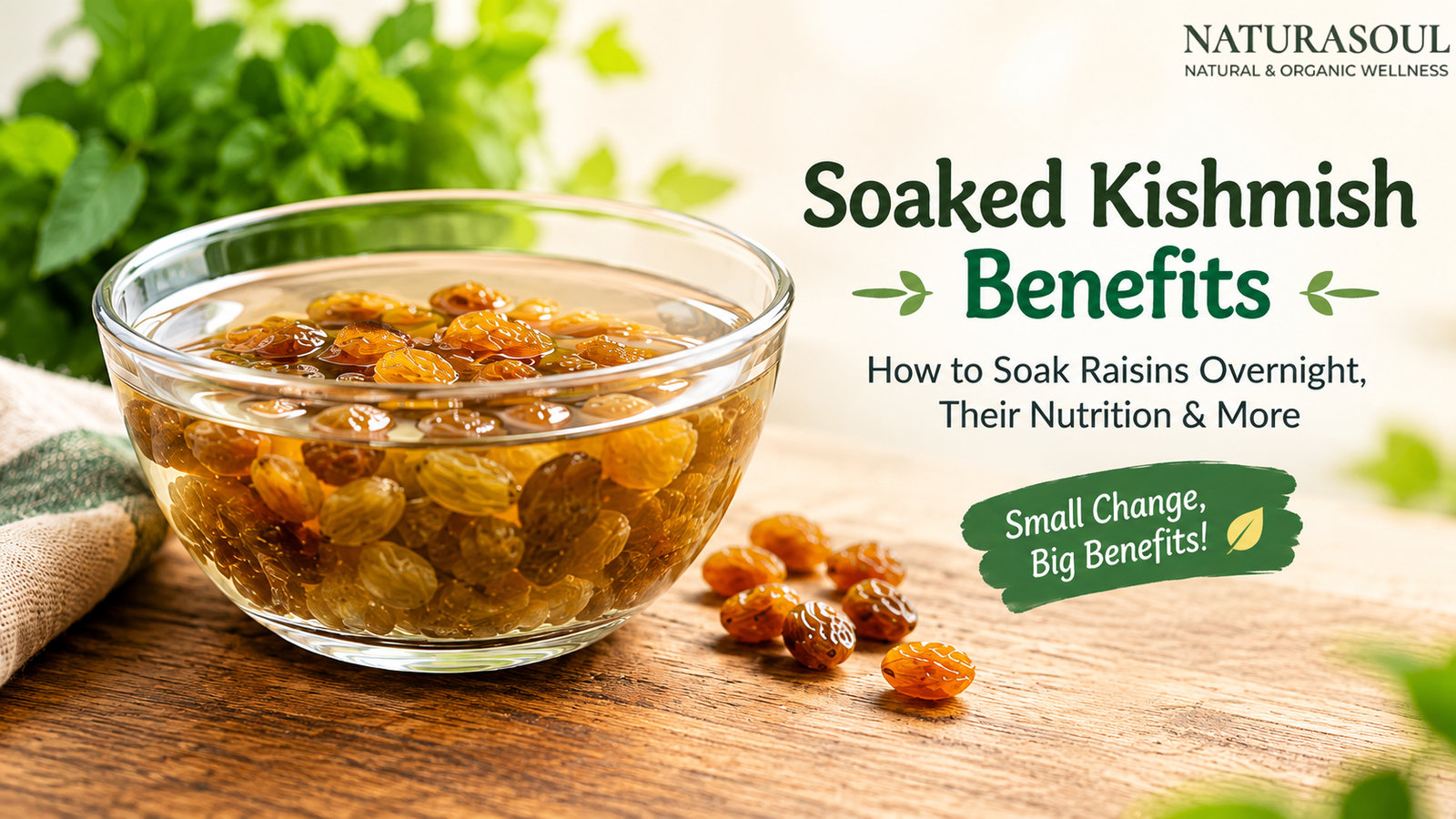
Soaked Kishmish Benefits: How to Soak Raisins in Water Overnight (Simple Guide)
Soaked kishmish benefits are raisins left in clean water for 6 to 8 hours or overnight until they turn plump
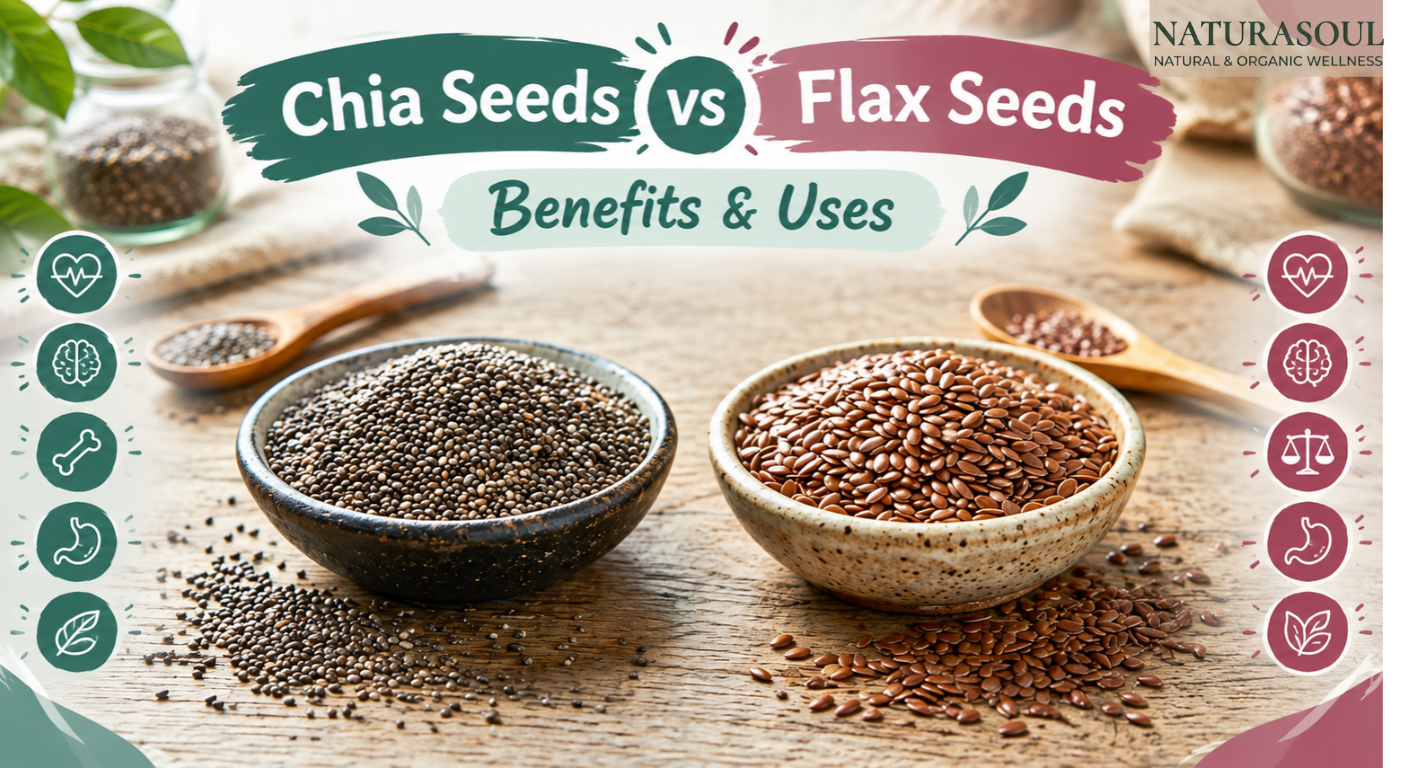
Chia Seeds vs Flax Seeds: Benefits, Uses & Which Should You Choose?
Chia seeds vs flax seeds is one of the most common questions in healthy eating, and for good reason. Both
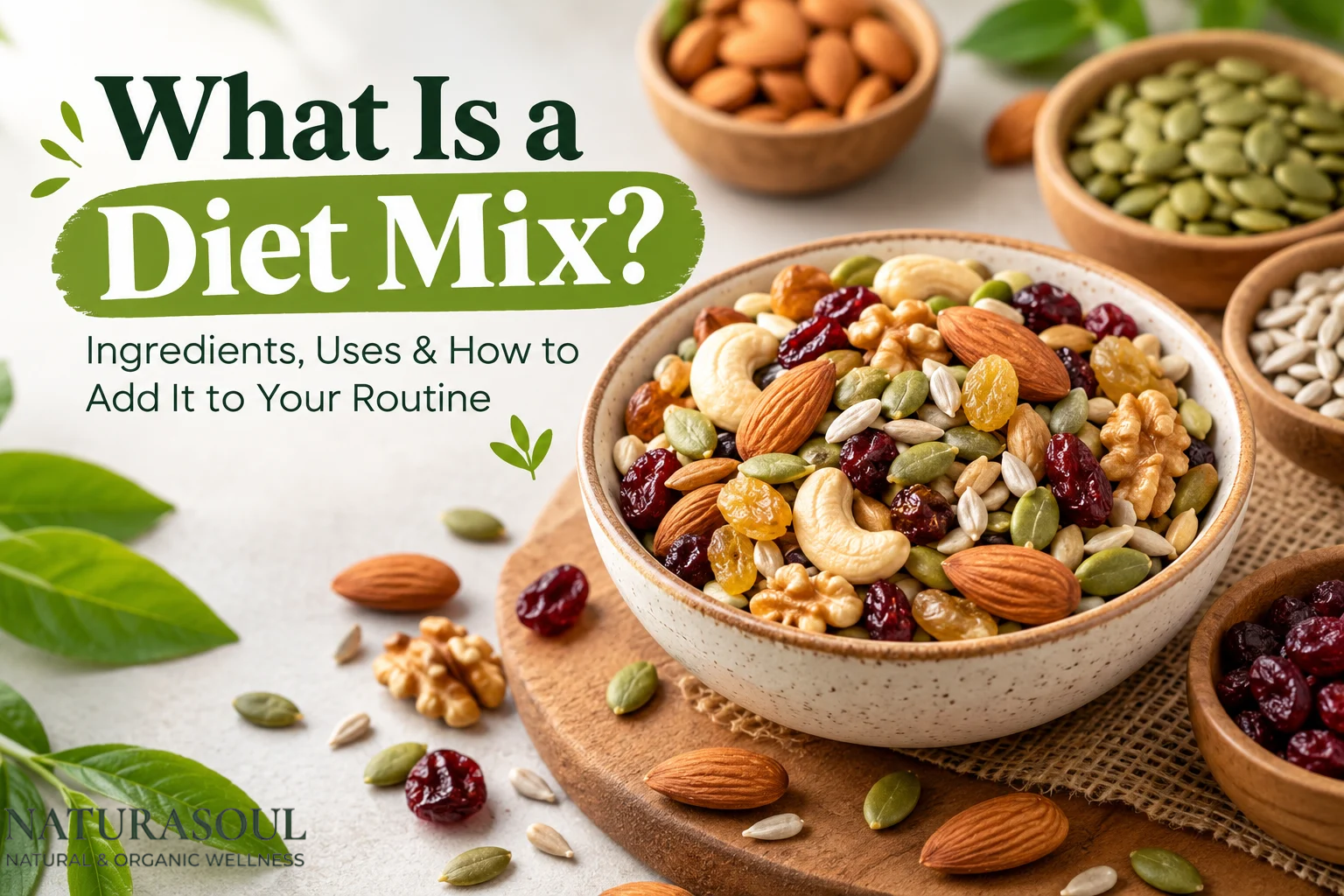
What Is a Diet Mixture? Ingredients, Uses & How to Add It to Your Routine
A diet mixture is a ready-to-eat blend of seeds, nuts and dry fruits, packed with fibre, healthy fats and plant
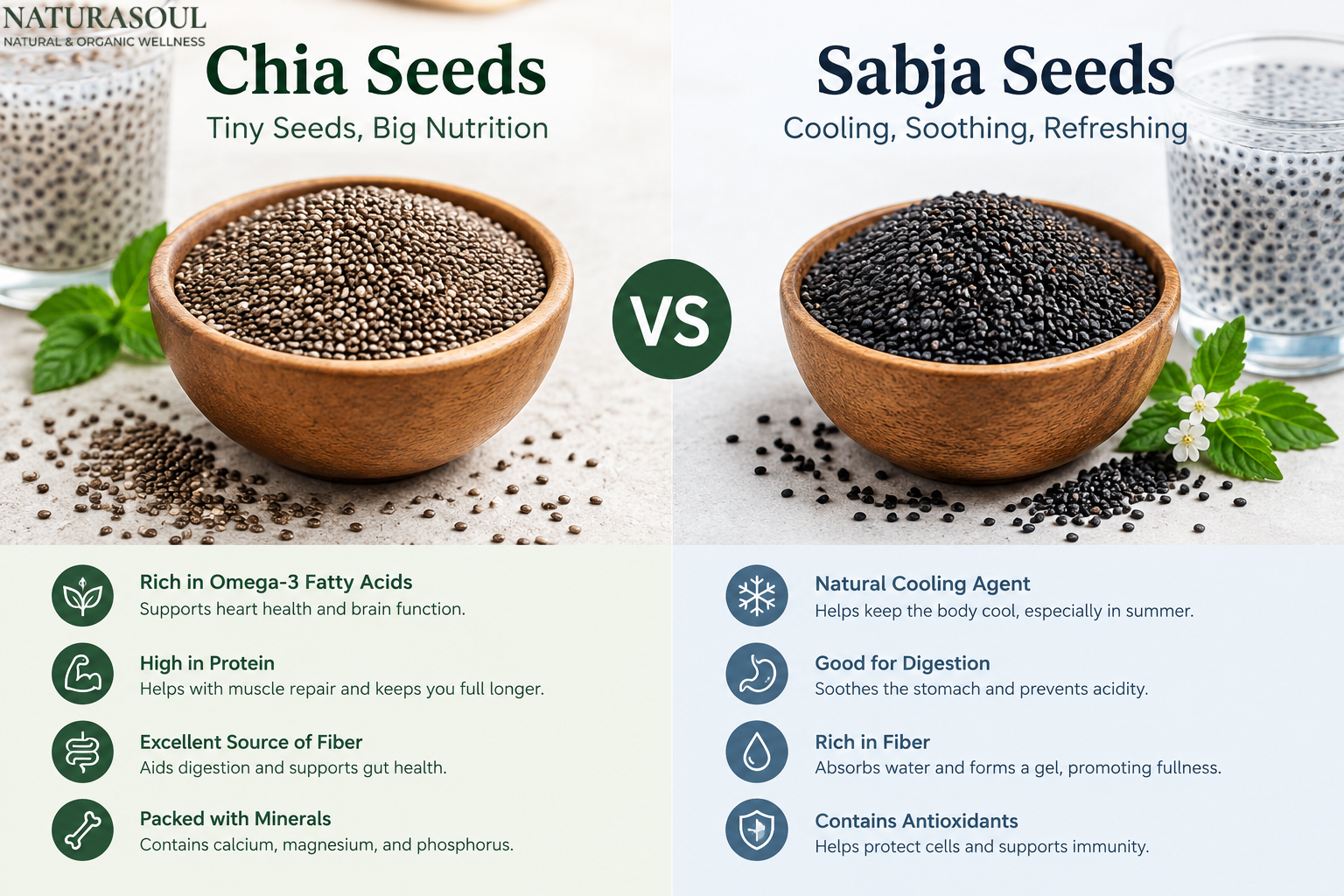
Chia Seeds vs Sabja Seeds: What’s the Real Difference?
Chia seeds vs sabja seeds (basil) look similar when soaked but come from different plants — chia seeds (Salvia hispanica)

10 Health Benefits of Eating Dry Fruits Daily for Energy & Nutrition
Eating a handful of dry fruits daily — like almonds, cashews, pistachios, and raisins — supports heart health, boosts immunity,