
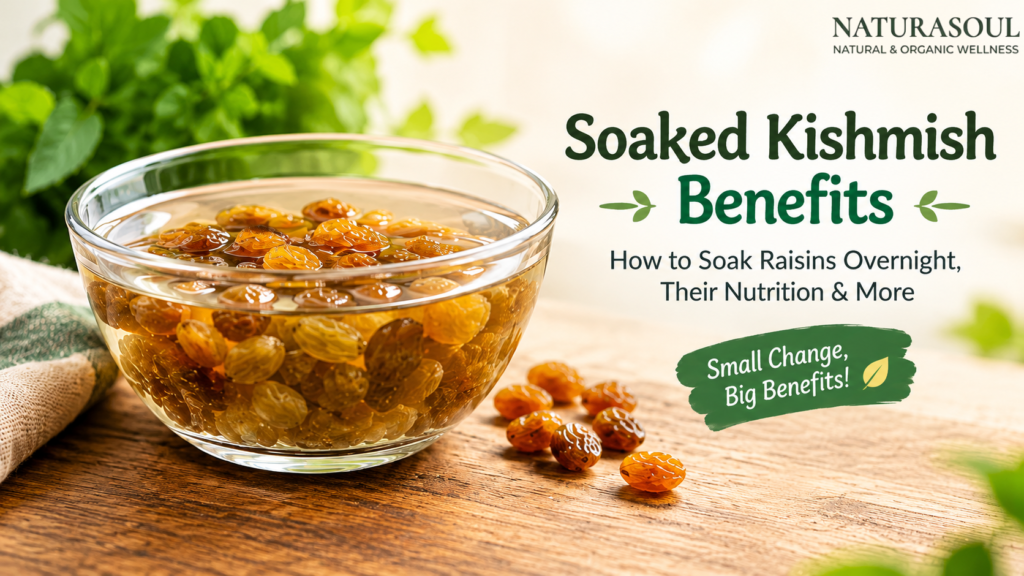
Soaked kishmish benefits are raisins left in clean water for 6 to 8 hours or overnight until they turn plump and soft. Soaking makes them easier to chew and digest, and they supply natural energy, fibre, potassium and a little iron. A good daily portion is 8 to 10 soaked raisins, eaten on an empty stomach or as a mid-morning snack.
If your grandmother ever handed you a bowl of soaked kishmish in the morning, she was onto something. This humble dry fruits is one of the easiest daily habits you can build. All you need is a cup of water, a handful of raisins and one night.
In this guide you’ll learn the real benefits, the right way to soak kishmish, how many to eat, and who should be careful.
What Is Kishmish?
Kishmish is the Hindi name for raisins, which are dried grapes. They are naturally sweet and chewy, and they come in several colours, including golden, green and dark brown. Because they are 100% fruit, they are a popular substitute for sugary sweets, especially in Indian homes.
Nutrition in Raisins (Per 28 g Handful)
| Nutrient | Approx. amount |
|---|---|
| Energy | about 85 kcal |
| Natural sugars | about 17 g |
| Dietary fibre | about 1 g |
| Potassium | about 210 mg |
| Iron | about 0.5 mg |
7 Benefits of Soaked Kishmish

- Easier to digest. Soaking softens the raisins and rehydrates them, which makes them gentler on the stomach, especially for people who find dry fruits heavy.
- Natural energy boost. Raisins are rich in natural sugars like glucose and fructose, so they give quick, clean energy for mornings and workouts.
- Supports regular digestion. Raisins contain fibre, and eating them with water-soaked softness may help keep bowel movements regular.
- Contains iron. Raisins have some iron and are often included in diets for people who want to improve their iron intake. They are a helpful food, but not a treatment for anaemia.
- Good for bones and heart. Raisins provide potassium, which supports normal blood pressure, along with small amounts of calcium and magnesium.
- Antioxidants. Raisins carry plant compounds called polyphenols that help protect cells from everyday oxidative stress.
- A healthier sweet swap. A few soaked raisins can satisfy a sweet craving without refined sugar.
How to Soak Raisins in Water Overnight (Step by Step)
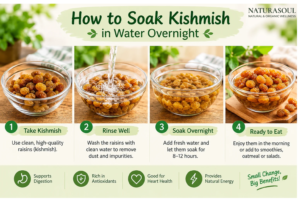
You will need: 8 to 10 raisins (kishmish), 1 cup (about 200 ml) clean drinking water, a clean glass or bowl.
- Rinse the raisins quickly under running water to remove dust.
- Add them to a glass or bowl and pour in clean water so they are fully submerged.
- Cover and leave for 6 to 8 hours, or overnight.
- Check that they look plump and soft.
- Eat the raisins on an empty stomach or as a morning snack. You can also drink the water.
Quick method (when you’re short on time): Soak in warm (not boiling) water for 15 to 30 minutes.
Tips for Best Results
- Use clean, filtered water.
- In hot weather, keep the bowl in the fridge so the raisins do not ferment.
- Do not soak for more than 10 to 12 hours.
- Chew them well instead of swallowing whole.
- Use good-quality, fresh raisins with no added sugar or preservatives.
Naturasoul’s Raisins (Kishmish) are naturally sweet, chewy and freshly packed, which makes them well suited for soaking.
Best Time to Eat Soaked Kishmish benefits
The most popular time is early morning on an empty stomach. You can also eat them:
- As a mid-morning or evening snack
- Before a workout for a natural energy lift
- Mixed into oats, curd or porridge
- With soaked almonds for a classic Indian dry fruit combo
How Many Soaked Raisins Should You Eat Per Day?
For most healthy adults, 8 to 10 soaked raisins (about 15 to 20 g) a day is a sensible amount. Raisins are concentrated in natural sugar, so eating too many adds calories quickly. Children can have a smaller portion of 4 to 5, depending on their age.
Kishmish Water: Should You Drink It?
Kishmish water is the leftover water after soaking. Many people drink it in the morning because it carries a little sweetness and some of the raisin’s soluble nutrients. Eating the soaked raisins along with the water is the best way to get the most from them.
Kishmish vs Munakka: What’s the Difference?
| Feature | Kishmish | Munakka |
|---|---|---|
| Size | Small | Large |
| Seeds | Usually seedless | Usually has seeds |
| Colour | Golden, green or brown | Dark brown / black |
| Taste | Light, sweet | Rich, deeper sweetness |
| Common use | Sweets, kheer, snacking | Soaked as a traditional health food |
Both are dried grapes and can be soaked the same way.
Who Should Be Careful?
- People with diabetes should keep portions small and check with their doctor, because raisins are high in natural sugar.
- Those watching weight or calories should stick to a small handful.
- People with sensitive digestion may get loose stools if they eat too many.
- Anyone with a grape allergy should avoid raisins.
- Young children under 4 should have chopped or well-softened raisins to avoid choking.
Buy Fresh, Naturally Sweet Kishmish Online
Soaking works best with good raisins. Naturasoul’s Raisins (Kishmish) are naturally sweet, chewy and freshly packed in 100g, 250g and 500g packs, delivered across India. Explore more in our Dry Fruits & Nuts collection, or read our guide on the health benefits of eating dry fruits daily. For a ready-to-eat mix, try our Diet Mix.
Frequently Asked Questions
What are the benefits of soaked kishmish?
Soaked kishmish is easier to chew and digest, gives natural energy, and provides fibre, potassium, antioxidants and a little iron.
How long should I soak raisins?
Soak for 6 to 8 hours or overnight. For a quick version, 15 to 30 minutes in warm water works.
How many soaked raisins can I eat daily?
About 8 to 10 soaked raisins (15 to 20 g) is enough for most healthy adults.
Is it good to eat soaked raisins on an empty stomach?
Yes, many people eat them first thing in the morning. If you have acidity or a sensitive stomach, have them after a light breakfast instead.
Can I drink the water after soaking kishmish?
Yes. It is safe if the raisins were soaked in clean water for less than about 10 to 12 hours.
Are soaked raisins good for weight loss?
They can replace sugary snacks, but they still contain calories. Keep to a small portion as part of a balanced diet.
Can diabetics eat soaked raisins?
In very small amounts, and only after checking with their doctor or dietitian, because raisins are high in natural sugar.
What is the difference between kishmish and munakka?
Kishmish is small and usually seedless, while munakka is larger, darker and usually has seeds. Both are dried grapes.

Best Dry Fruits to Eat in Winter | Benefits & Daily Quantity Guide
The best dry fruits for winter are almonds (badam), cashews (kaju), pistachios, raisins, dried Fruits snakcs. A common daily serving
Soaked Kishmish Benefits: How to Soak Raisins in Water Overnight (Simple Guide)
Soaked kishmish benefits are raisins left in clean water for 6 to 8 hours or overnight until they turn plump
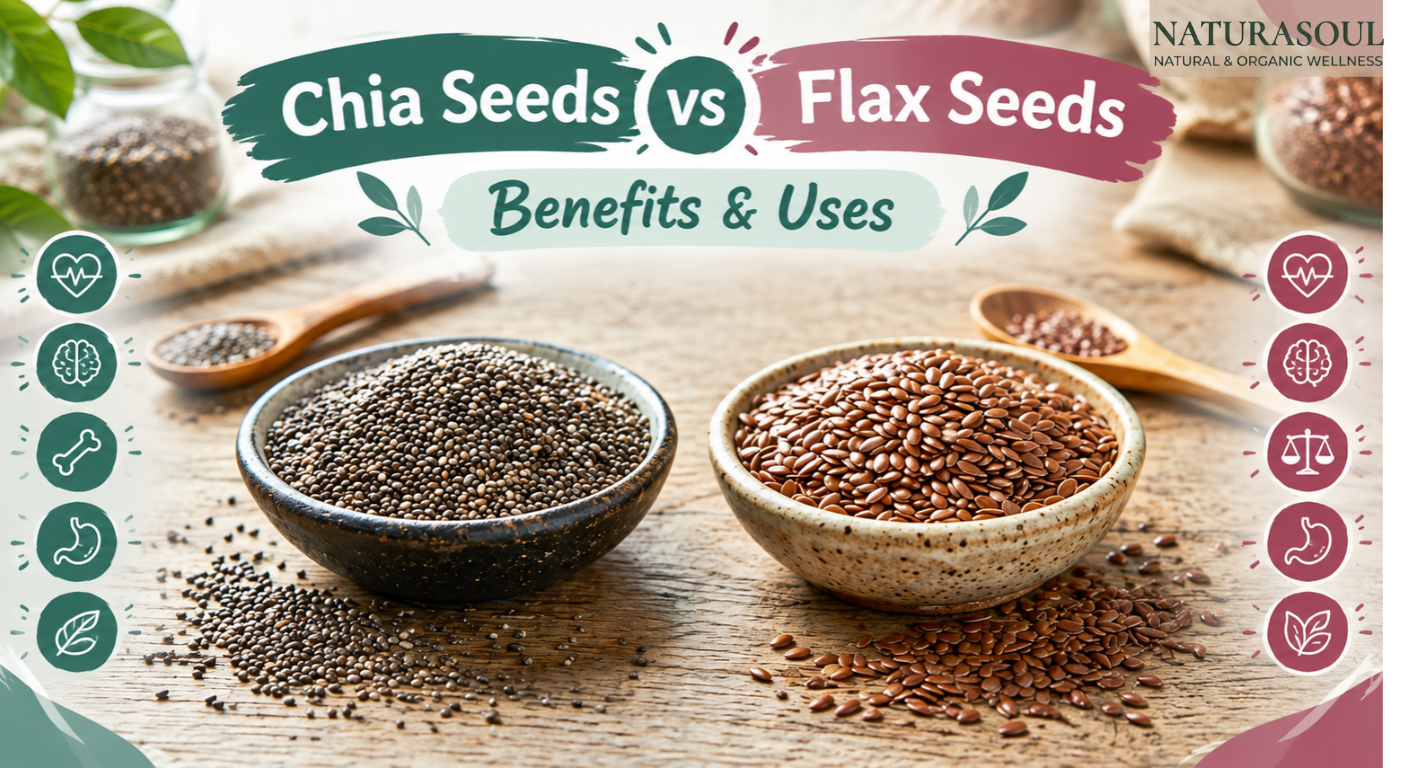
Chia Seeds vs Flax Seeds: Benefits, Uses & Which Should You Choose?
Chia seeds vs flax seeds is one of the most common questions in healthy eating, and for good reason. Both

What Is a Diet Mixture? Ingredients, Uses & How to Add It to Your Routine
A diet mixture is a ready-to-eat blend of seeds, nuts and dry fruits, packed with fibre, healthy fats and plant
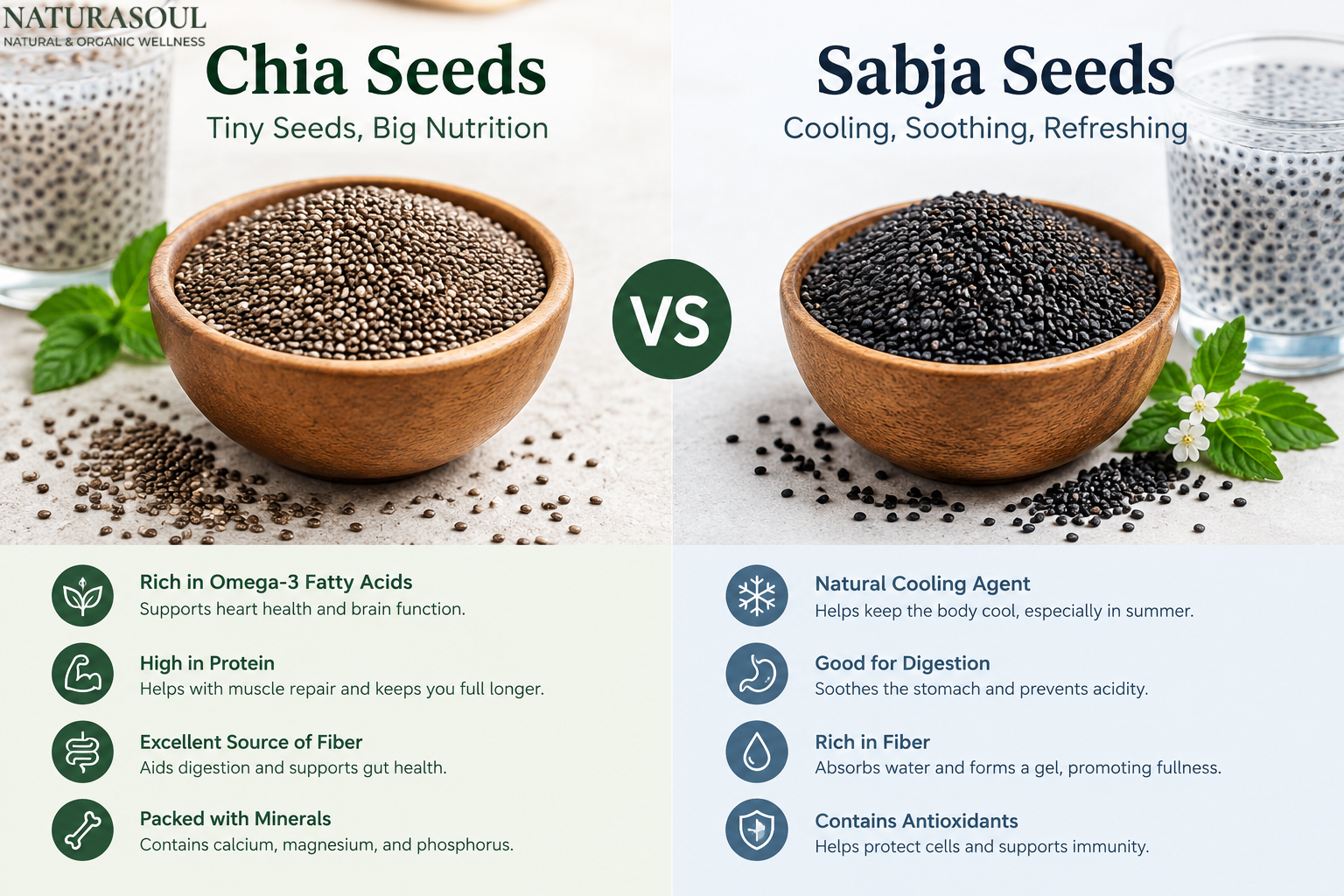
Chia Seeds vs Sabja Seeds: What’s the Real Difference?
Chia seeds vs sabja seeds (basil) look similar when soaked but come from different plants — chia seeds (Salvia hispanica)

10 Health Benefits of Eating Dry Fruits Daily for Energy & Nutrition
Eating a handful of dry fruits daily — like almonds, cashews, pistachios, and raisins — supports heart health, boosts immunity,